Posts

Showing posts with the label romance

"Possession" by A.S. Byatt (published 1990)
Image
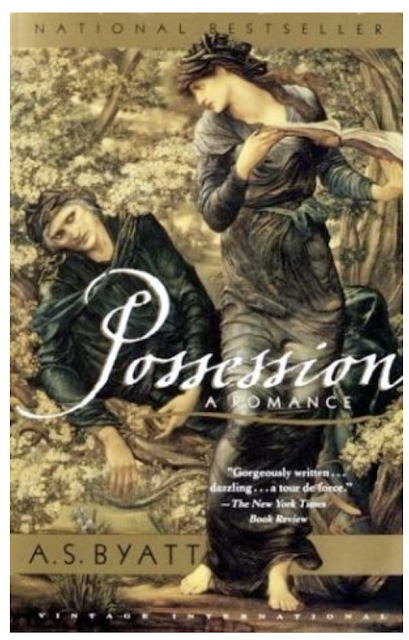
A work of art can be understood as something to one, and something completely different to another. And then, it means something to the author. Sometimes there is a line of clarity, where everyone agrees, and other times the ideas produced by a work are so vastly different that we wonder how to make sense of it at all. We all know and have felt this frenzied state of interpretation. Moreover, we go back to old and new pieces time and time again; a song, a book, a poem, a painting, and as we experience it there is another realization: that time itself has changed the thing, placing it into newer, broader categories of meaning and truth. A.S. Byatt's Possession , winner of the Man Booker Prize in 1990, is a perfect representation of that kaleidoscopic manifestation of art, lived by its creator and then posthumously, and then into academic elucidation. The story, which claims many voices, is mastered by the study of what begins as a singular poet: Randolph Henry Ash. The stud...

"Submergence" by J.M. Ledgard (published 2011)

Image
“Submergence”, written in 2011 by J.M. Ledgard (who has written for both “The Economist” and “The Atlantic”) is a novel that is shaped perfectly for the contemporary world. Its scope covers geography, philosophy, science, and politics. Though “Submergence” is all these amazing things, Ledgard manages to subtlety underscore these weighty themes with a poignant drama and romance that travels far deeper within the emotional psyche compared to how far it actually treks globally. While all this may seem in the written word - to some narrower minds - as pretentious, it is, in fact, the opposite. “Submergence” aims to illuminate how so very small, so very precious, but still small, humankind really is in the face of the natural world: which includes its technology, the subsequent wars produced by that technology, in this case the War in Afghanistan which continues to the present, as well as untouched Earthly landscapes such as the Hadal Deep, the deepest part of the ocean. Granted,...

Beren and Luthien by J.R.R. Tolkien

Image
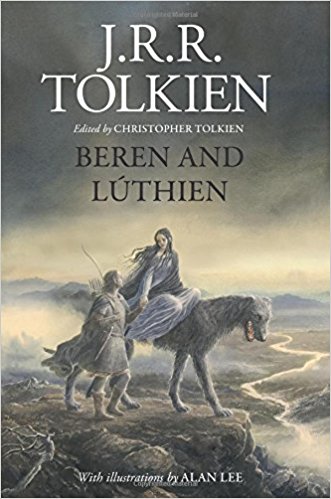
J.R.R. Tolkien’s “Beren and Luthien”, published for the first time as a standalone novel by his son, Christopher Tolkien, last year (2017), is a romantic fairy-tale and fantasy story about the love and journey between a mortal man – Beren - and an Elfin maiden – Luthien. The tale is included in Christopher Tolkien’s edition of his father’s other work, “The Silmarillion”, but is, in this publication, told in full detail, with most of J.R.R. Tolkien’s editions, revisions, embellishments and subtractions included. Reading this publication is like listening to the same piece of music over and over again. Though it is the same song being played, each time it is played the song sounds quite different, with each unique articulation changing the mood, tone, and pace of its story, allowing the listener, or here, the reader, to pay attention to the intricate details, from which an infinite amount of meanings and renderings can be produced. “Beren and Luthien” was notably written a year after...

"This Burns My Heart" by Samuel Park (published 2011)

Image
Have you heard this story before? A woman, torn between her feelings for two different men, ends up making the wrong decision and lives a life of pain, suffering, and longing. Does that sound familiar? Though that storyline comprises the basic plot of Samuel Park’s “This Burns My Heart” (2011), I promise that there is something especially distinctive about this story, which I would even go so far as to call an epic saga. The novel is made up of four parts, each one named for a plant organism special to Korean culture; Part 1: Chrysanthemum, Part 2: Orchid, Part 3: Plum Blossom, and Part 4: Bamboo.   Each of these plants represents something specific, which is beautifully explained by Park within the context of the story, but can be said simply to symbolize resilience, strength, and persistence in the face of harsh circumstances. These characteristics align with how Korean society became after the war, during the 1960s. Everyone in “This Burns My Heart” is an embodiment ...

"Jane Eyre" by Charlotte Bronte (published 1847)

Image
Charlotte Brontë’s well-known novel, Jane Eyre, was published in the year 1847, which is a time that took place during England’s Victorian Era. Brontë’s book is considered by most conventional standards as a work of Gothic Fiction, defined as a mix of fiction and horror, death and romance. Along with elements of the macabre, which make up a part of Gothic literature, there is also Gothic architecture, which defined it also as an aesthetic. Time and place are two very essential parts of understanding literature, and very literally make up the background of a well-written story. The foreground of the story is the characters and their relationships, both to one another and the larger social world they live in. Both background and foreground as presented here will be discussed and will answer two simple questions: 1) Why was Jane Eyre so important when it was published? & 2) Why is Jane Eyre still relevant today? Every era has its societal standards, its status quo. The Victorian E...

"The Light Between Oceans" by M.L. Stedman

Image
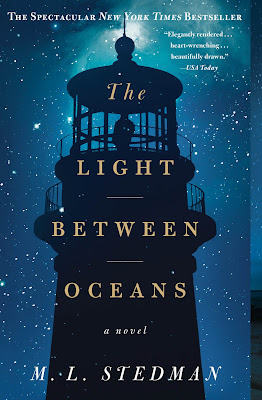
Sometimes a good object lesson made in story form can be better than something overly dramatic and dripping with sentimentality. The Light Between Oceans is a perfect object lesson about the blurred lines between the usually stark contrast of right and wrong. Morality, no matter how much some might like to convince themselves of it, is never easy. London based, Australian author M.L. Stedman writes her powerful first story, The Light Between Oceans, conveying this complexity in all its perfect dimensions. Tom Sherbourne, well-respected World War I veteran, is emotionally and spiritually wounded after his return from action, especially by the fact that he survived while many of his comrades were brutally killed. The question of why *he* was the one that was allowed to live nags at him daily. Damaged also from a broken home, Sherbourne puts the entirety of his mind and soul into his work. He is detailed and exhaustive in the work he does, and soon he is known as one of the best light...

"Rose Daughter" by Robin McKinley (published 1997)

Image
Is it true that nowadays we sometimes become numb (by forgetting – usually not deliberately) of our bodily sensations… and all kinds of feeling? I’m not sure why this happens, but I know that reading reminds us of the world around us with words that bring our thoughts back to what being alive feels like. Then, consciousness is gained and seemingly ordinary sights, smells, tastes, textures, and sounds that envelop us every day and every night become prominent once more. Robin McKinley’s “Rose Daughter”, published in 1997, nineteen years after her debut novel was written, titled “Beauty”, does all the things mentioned. In McKinley’s second retelling of the classic story “Beauty & the Beast” or, “La Belle Et La Bete”, I’ve learned to cherish those moments of profound presence that McKinley’s story offered me. In McKinley’s Beast’s palace there are trowels, gossamers, hydras, phoenixes, briars, numen, torcheres, virgins bowers, pietra duras, beech trees, sphinxes, and balustrades ...

"Girl In The Moonlight" (published 2015)

Image
Not many books are able to leave the reader with such powerful emotions as the novel “Girl In The Moonlight” by Charles Dubow. The feeling is almost even painful at times, and it is complex, just as much as the characters in the story are, as the story urges one to contemplate what has just been read months and months after, maybe without even realizing it. This is the mark of a great book. Moreover, a great piece of literature. Charles Dubow gives readers access to an unquestionably elusive and exclusive world of prestige and glamour, with all its idiosyncrasies, etiquettes, and privileges. Dubow portrays families that have a lot of money, and there is nothing sugarcoated about their lives; there is nothing that makes them any “richer” than the next man. The book is a pleasure to read because it presents a gateway into a social stratum by which only the few are a part. The book also allows the reader to take note of the best works of art by reminding us of such people as Rainer M...