Posts

Showing posts with the label nineteenth century literature

"The Woman In White" by Wilkie Collins (published 1859)

Image
Wilkie Collins’ novel The Woman In White has themes that may seem cliché: love conquers all, the truth will always come out in the end, people with an air of superiority usually have something to cover up… as Alexander Pope once said, “Charms strike the sight, but merit wins the soul.” Collins’ The Woman In White proves that, and is everything but cliché. This lengthy masterpiece of a novel is part sensation novel, part mystery, part social commentary, and of course, like every good story, part romance. It is a book that probably should be read slowly so as to savor every idea and emotion offered by this talented writer. And to read this novel slowly is exactly how it was read in 19th century England, when Collins submitted his story, chapter by chapter, week by week, to Charles Dickens’ magazine, All the Year Round. Victorians consumed this novel like starving animals from the year 1859-1860. This was a time of excess and pleasure, and “grandiose” performance (Sweet, Introduction)...
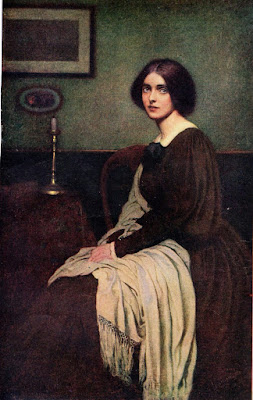
"Jane Eyre" by Charlotte Bronte (published 1847)

Image
Charlotte Brontë’s well-known novel, Jane Eyre, was published in the year 1847, which is a time that took place during England’s Victorian Era. Brontë’s book is considered by most conventional standards as a work of Gothic Fiction, defined as a mix of fiction and horror, death and romance. Along with elements of the macabre, which make up a part of Gothic literature, there is also Gothic architecture, which defined it also as an aesthetic. Time and place are two very essential parts of understanding literature, and very literally make up the background of a well-written story. The foreground of the story is the characters and their relationships, both to one another and the larger social world they live in. Both background and foreground as presented here will be discussed and will answer two simple questions: 1) Why was Jane Eyre so important when it was published? & 2) Why is Jane Eyre still relevant today? Every era has its societal standards, its status quo. The Victorian E...