Posts

Showing posts with the label fairy-tales

"Moth and Spark" by Anne Leonard (published 2014)

Image
"A woman in one village had the Sight and predicted doom. There were always such stories somewhere; natural philosophy was still the province of the rich and educated. The poor would have their gods of tree and stream and hollow, their hedgerow cures and charms. But those things were not usually tossed about in tavern gossip. For them to come out now meant fear of something else that was too hard to face. He had seen the hex signs, the wardings, on the farmhouse doors and the roofs of barns. On the sides of the roads were little primitive pyramids of stone for guarding and shrines with offerings of food. People expected evil. It made no sense, not even accounting for the uneasiness the dragons cast... it was the newness of it, he decided, made from raw fear and not unthinking custom." (p. 8, 10) Anne Leonard's Moth and Spark  (2014) tells a saga of old magic's renewal in desperate times of unknowing and obscured discernment within the kingdom of Caithen, a co...

"The Bear and the Nightingale" (Winternight Trilology #1) by Katherine Arden (published 2017)

Image
"He knew what evil lay upon this land. It was in the sun-symbols on the nurse's apron, in that stupid woman's terror, in the fey, feral eyes of Pyotr's elder daughter. The place was infested with demons: the chyerti of the old religion. These foolish, wild people worshipped God by day and the old gods in secret; they tried to walk both paths at once and made themselves base in the sight of the Father. No wonder evil had to come to work its mischief." (p. 113) This passage, found one third a way into Katherine Arden's  The Bear and the Nightingale  (2017), tells of Konstantin, a monk from Moscow, visiting a small village on the outskirts of the kingdom. Konstantin believes he has a mission, a "duty", to save the village people from pagan beliefs and folkloric tradition, but, as the story goes, the collision of God and duty alongside enchantment and magic just make the sum of all parts a more potent whole. Though this story is set in Russia at...

Contemporary Fairy-Tale & Folklore Novels/Novelizations in Adult Literature

Reviews are in the process of being added; book titles are hyperlinked to an outside reviewer or other source and my own reviews are linked as indicated.  The Alehouse at the End of the World by Stevan Allred (2018) All the Birds in the Sky by Charlie Jane Anders (2016) All the Ever Afters: The Untold Story of Cinderella's Stepmother by Danielle Teller (2018) Apothecary Melchoir by Indrek Hargla (2017) The Barefoot Woman by Scholastique Mukasonga (2020) The Bear by Andrew Krivak (2020) The Bear and the Nightingale (Winternight Trilogy #1) by Katherine Arden (2017) | My review:  https://feliciareviewsbooks.blogspot.com/2020/02/the-bear-and-nightingale-winternight.html The Beast's Heart by Leif Shallcross (2019) Beauty is a Wound by Eka Kurniawan (2002) The Bird King: A Novel by G.Willow Wilson (2019) Bird Summons by Leila Aboula (2020) The Blue Fox by Sjon (2003) The Boatman's Daughter by Andy Davidson (2020) Bohemian Gospel (Bohemian Trilogy #...

"Perdido Street Station" by China Mieville (published 2000)

Image
Oh Gods, jabber, Devil's Tail, damn. This book is the best I've read this year. Though -  I'd recommend "Perdido Street Station" to those who are already partial to fantasy, fairy-tales, and science fiction, because the entire novel is heavily steeped in those genre elements and it's an extremely strong brew; a thick and boasty blend, yet a sweet and tart mix of character-driven action, fast-paced at over seven-hundred pages that pulsate with anthropomorphic creatures, evil monsters, a brilliant and non-conforming scientist, beautifully winged-bug maidens, a seedy underworld, a corrupt bureaucracy, sentient A.I. robotrons, pretentious art-world snobs, a hellish brothel of indescribable, sinful creatures and so. much. more.  I'll begin with Isaac, the main character, our passionate scientist unaccepted by his fellows because, well, he's a bit *avant-garde* for his discipline. His thing: Crisis Theory. He's been working on it for some time, but ...

"Snow White" translated by Paul Heins and illustrated by Trina Schart Hyman (published 1974)

Image
I'll never tire of this story. Trina Schart Hyman's illustrations are beautiful, using rich, dark hues of deep browns, deep maroons, deep greens and grays that contrast nicely with brighter blues and reds. The colors bleed together and fill the pages with warmth, creating full borders for the text of the story itself. Paul Heins' translation is straight-forward yet elegant and magical, making a perfect bedtime read for little ones or for fairy-tale lovers of any age. The cottage, castle, woodland and its animals will remind readers of a place that never gets old, that special place that hasn't disappeared from our imaginations for centuries.

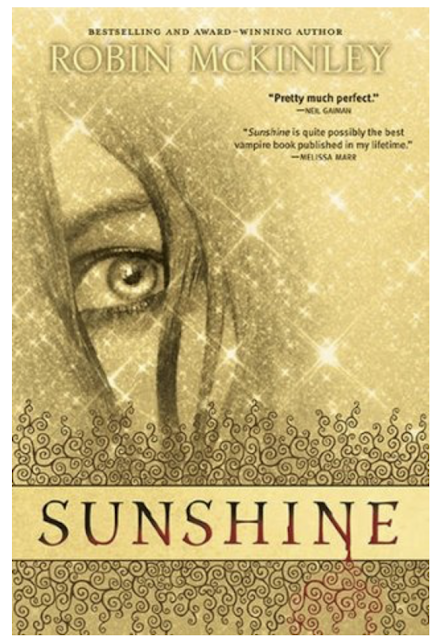
"Sunshine" by Robin McKinley (published 2004)

Image
I might come back to this one: I just couldn't get into the story as much as I would have liked. Something about the very drastic contrast between the arbitrariness of day to day life in the coffee shop, family stuff, and romantic relationships and its stark contrast to the world-history of the Wars between the Others (of various mythological manifestations: i.e. vampires and sorcerers, etc.). Put more simply, there wasn't enough a blurred line right off of the bat between the fantastic and the normal (a blurry-ness which gives that aura of wonder to the fairy-tales I typically read). Also, this narrative reminds me a bit of the television show "True Blood" and I was never a fan of that one either (although my husband is). Lastly, I'm an old soul, admittedly, and McKinley's writing here caters more to young souls (personal opinion); the narrator herself is fairly young (early to mid 20s?) and everything in her world is deemed devoid of mystery on accounts ...

"Transformations" by Anne Sexton (published 1971)

Image
Brilliant, beautiful, sad. With slight sardonic quips and a strong sense for dysfunction, my only complaint is the shrinking of wonder by Sexton’s unveiling of a darker, more painful sense of the martyr’s plight. That may be what Sexton got wrong: that the main character of the fairy-tale is saintly. No, only unknowing, lacking scheme, lacking artifice. Still, the seventeen poems based off of fairy-tales in “Transformations” are brilliant, beautiful, and sad all the same. For all souls who may feel a bit jaded with the world, this one’s for you.

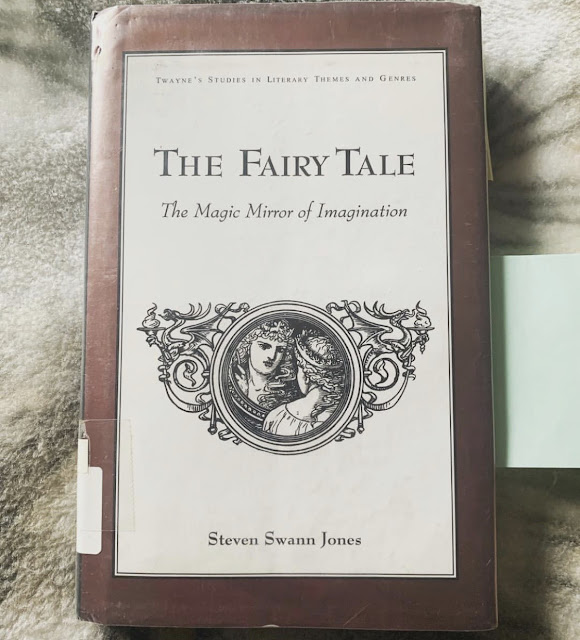
"The Fairy Tale: The Magic Mirror of Imagination" by Steven Swann Jones (published 1995)

Image
Steven Swann Jones' "The Fairy Tale: The Magic Mirror of Imagination" is a great beginner's introduction to the fairy tale genre. While much of his criticism stresses what seems to me "dated" (actually the book is a bit dated for this field) concerns regarding the fairy tale - the regulation of female protagonists to domestic duties under the patriarchy, for example - I really learned a lot about the fairy tale genre as being a form of story exemplary of the "common" person, the "regular" man or woman, the "ordinary". I'd say I, for the most part, agree. Swann Jones makes clear that fairy tales usually feature a main character who isn't *special* in any particular way and under enormous social pressure as well. My response to both these criticisms is this: how can we find a way to understand the fairy tale story as a way of expressing the *extraordinary* tasks of women (whether in the domestic sphere or otherwise)? ...

"Victorian Fairy Tales" Edited by Michael Newton (published 2015)

Image
For those true lovers of the literary fairy-tale, this publication, released in 2015 by Oxford University Press (so fairly new for a collection such as this), is a must-read. While we are very familiar with those fairy-tales considered classics, ranging from many countries in Europe, such as Cinderella, The Little Mermaid, and Hansel & Gretel , the collection here is strategic in that all authors included are British, and moreover, these stories emerged during the Victorian Era. This may or may not surprise you, but England is not so famous for their fairy-stories, in so much as those writers like The Brothers Grimm ( Hansel & Gretel)  or Hans Christian Anderson (The Little Mermaid) , Charles Perrault (Cinderella) or Madame D'Aulnoy (Beauty and the Beast) . We don't really remember who exactly wrote The Three Bears , The Selfish Giant, and The Reluctant Dragon (all of which are included here) - and we don't really realize they are fairy-tales from the Victorian...