Posts

Showing posts with the label fairy-tale

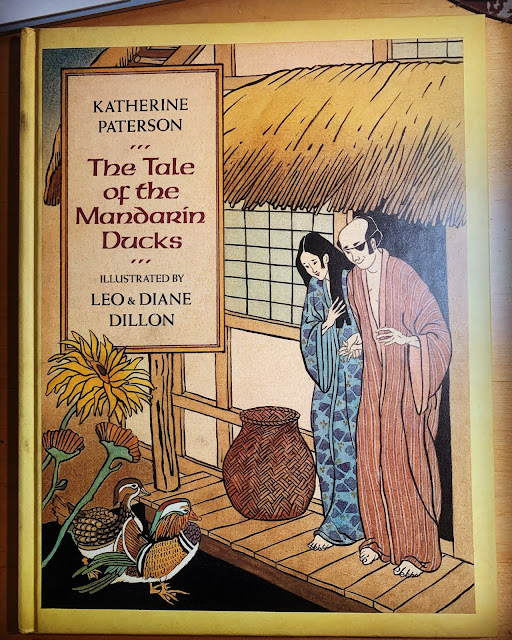
"The Tale of the Mandarin Ducks" by Katherine Paterson (Illustrated by Leo & Diane Dillon)
Image
Katherine Paterson's retelling of the classic Japanese folktale, "The Tale of the Mandarin Ducks" (1990), is perfectly encapsulated in the form of a children's picture book, with richly toned traditional illustrations (olive greens, sunflower yellows...) by Leo & Diane Dillon. In it, a masterful story of a stolen drake unfolds. Deep in nature, a beautiful, colorful drake lives with his wife. But when he is taken from his home to the lord's manor (to be on display within a cage), the drake grows weary and utterly depressed, unable to sustain himself, only thinking of his worried wife. Luckily, a sympathetic and wise person intervenes, and from there, the story blossoms into one of magic, divine oversight, and karmic fruition, all stemming from a continuous surging of two people's kindness towards the rest of the world. You'll find out how a little touch of compassion, shared by humans and animals alike, is enough to outweigh those terribly hurtful i...

"Moth and Spark" by Anne Leonard (published 2014)

Image
"A woman in one village had the Sight and predicted doom. There were always such stories somewhere; natural philosophy was still the province of the rich and educated. The poor would have their gods of tree and stream and hollow, their hedgerow cures and charms. But those things were not usually tossed about in tavern gossip. For them to come out now meant fear of something else that was too hard to face. He had seen the hex signs, the wardings, on the farmhouse doors and the roofs of barns. On the sides of the roads were little primitive pyramids of stone for guarding and shrines with offerings of food. People expected evil. It made no sense, not even accounting for the uneasiness the dragons cast... it was the newness of it, he decided, made from raw fear and not unthinking custom." (p. 8, 10) Anne Leonard's Moth and Spark  (2014) tells a saga of old magic's renewal in desperate times of unknowing and obscured discernment within the kingdom of Caithen, a co...

Contemporary Fairy-Tale & Folklore Novels/Novelizations in Adult Literature

Reviews are in the process of being added; book titles are hyperlinked to an outside reviewer or other source and my own reviews are linked as indicated.  The Alehouse at the End of the World by Stevan Allred (2018) All the Birds in the Sky by Charlie Jane Anders (2016) All the Ever Afters: The Untold Story of Cinderella's Stepmother by Danielle Teller (2018) Apothecary Melchoir by Indrek Hargla (2017) The Barefoot Woman by Scholastique Mukasonga (2020) The Bear by Andrew Krivak (2020) The Bear and the Nightingale (Winternight Trilogy #1) by Katherine Arden (2017) | My review:  https://feliciareviewsbooks.blogspot.com/2020/02/the-bear-and-nightingale-winternight.html The Beast's Heart by Leif Shallcross (2019) Beauty is a Wound by Eka Kurniawan (2002) The Bird King: A Novel by G.Willow Wilson (2019) Bird Summons by Leila Aboula (2020) The Blue Fox by Sjon (2003) The Boatman's Daughter by Andy Davidson (2020) Bohemian Gospel (Bohemian Trilogy #...

"Classic Japanese Fairy-Tales: Volume II" by Mimei Ogawa, translated by J.D. Wisgo

Image
Translated from the Japanese, this collection of eight fairy-tales by Mimei Ogawa is full of delicate renderings that illuminate as well as sooth the harshness of life. How do we begin to bridge the gap between forced enemies? Or, what should we do with an enchanted remedy only good for one dose? There isn't a nice and neat ending to all of these (for example, "The Fishmonger Woman"), further supporting the theory that "happily-ever-after" is not a necessary component of the fairy-tale. Rather, the words that have been carefully translated by J.D. Wisgo from the pen of a deceased writer offers a brief and beautiful glimpse into moments of life that have been slowed down for the pleasure of contemplation. Wisgo fills each word with a sensitivity that reaches deep into an older culture that thrives today, yet is more hidden than ever before, like sketches or outlines of a world without its distractions; see "The Dog, the Man, and the Flower", just a...

"Snow White" translated by Paul Heins and illustrated by Trina Schart Hyman (published 1974)

Image
I'll never tire of this story. Trina Schart Hyman's illustrations are beautiful, using rich, dark hues of deep browns, deep maroons, deep greens and grays that contrast nicely with brighter blues and reds. The colors bleed together and fill the pages with warmth, creating full borders for the text of the story itself. Paul Heins' translation is straight-forward yet elegant and magical, making a perfect bedtime read for little ones or for fairy-tale lovers of any age. The cottage, castle, woodland and its animals will remind readers of a place that never gets old, that special place that hasn't disappeared from our imaginations for centuries.

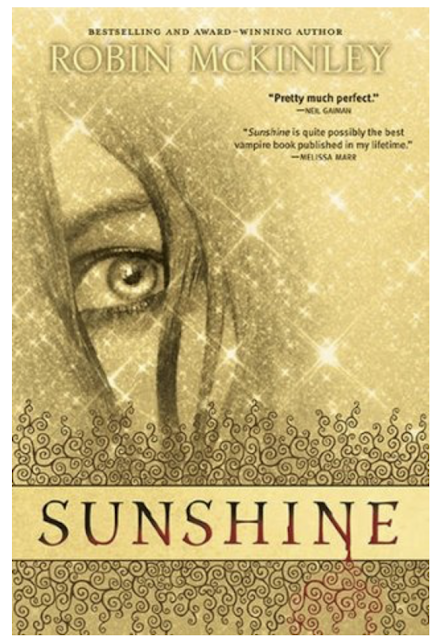
"Sunshine" by Robin McKinley (published 2004)

Image
I might come back to this one: I just couldn't get into the story as much as I would have liked. Something about the very drastic contrast between the arbitrariness of day to day life in the coffee shop, family stuff, and romantic relationships and its stark contrast to the world-history of the Wars between the Others (of various mythological manifestations: i.e. vampires and sorcerers, etc.). Put more simply, there wasn't enough a blurred line right off of the bat between the fantastic and the normal (a blurry-ness which gives that aura of wonder to the fairy-tales I typically read). Also, this narrative reminds me a bit of the television show "True Blood" and I was never a fan of that one either (although my husband is). Lastly, I'm an old soul, admittedly, and McKinley's writing here caters more to young souls (personal opinion); the narrator herself is fairly young (early to mid 20s?) and everything in her world is deemed devoid of mystery on accounts ...

"Transformations" by Anne Sexton (published 1971)

Image
Brilliant, beautiful, sad. With slight sardonic quips and a strong sense for dysfunction, my only complaint is the shrinking of wonder by Sexton’s unveiling of a darker, more painful sense of the martyr’s plight. That may be what Sexton got wrong: that the main character of the fairy-tale is saintly. No, only unknowing, lacking scheme, lacking artifice. Still, the seventeen poems based off of fairy-tales in “Transformations” are brilliant, beautiful, and sad all the same. For all souls who may feel a bit jaded with the world, this one’s for you.

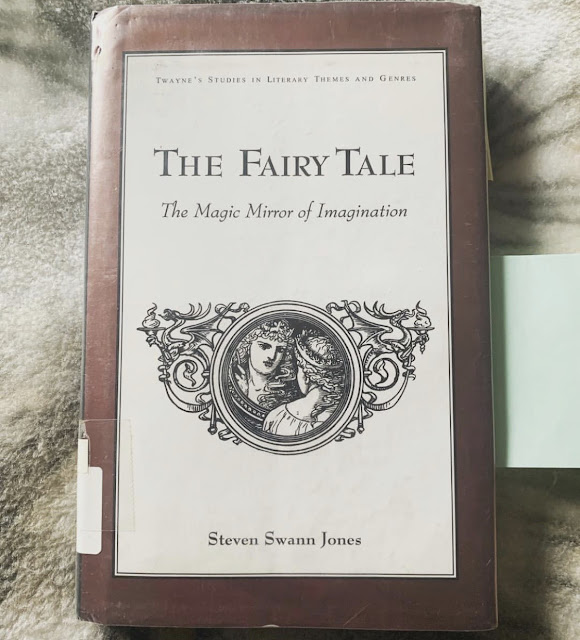
"The Fairy Tale: The Magic Mirror of Imagination" by Steven Swann Jones (published 1995)

Image
Steven Swann Jones' "The Fairy Tale: The Magic Mirror of Imagination" is a great beginner's introduction to the fairy tale genre. While much of his criticism stresses what seems to me "dated" (actually the book is a bit dated for this field) concerns regarding the fairy tale - the regulation of female protagonists to domestic duties under the patriarchy, for example - I really learned a lot about the fairy tale genre as being a form of story exemplary of the "common" person, the "regular" man or woman, the "ordinary". I'd say I, for the most part, agree. Swann Jones makes clear that fairy tales usually feature a main character who isn't *special* in any particular way and under enormous social pressure as well. My response to both these criticisms is this: how can we find a way to understand the fairy tale story as a way of expressing the *extraordinary* tasks of women (whether in the domestic sphere or otherwise)? ...

"Victorian Fairy Tales" Edited by Michael Newton (published 2015)

Image
For those true lovers of the literary fairy-tale, this publication, released in 2015 by Oxford University Press (so fairly new for a collection such as this), is a must-read. While we are very familiar with those fairy-tales considered classics, ranging from many countries in Europe, such as Cinderella, The Little Mermaid, and Hansel & Gretel , the collection here is strategic in that all authors included are British, and moreover, these stories emerged during the Victorian Era. This may or may not surprise you, but England is not so famous for their fairy-stories, in so much as those writers like The Brothers Grimm ( Hansel & Gretel)  or Hans Christian Anderson (The Little Mermaid) , Charles Perrault (Cinderella) or Madame D'Aulnoy (Beauty and the Beast) . We don't really remember who exactly wrote The Three Bears , The Selfish Giant, and The Reluctant Dragon (all of which are included here) - and we don't really realize they are fairy-tales from the Victorian...

"Black Heart, Ivory Bones" Edited by Ellen Datlow and Terri Windling (published 2000)

Image
In this hilarious, enchanting, and moving collection of twenty fairy-tales, readers will traverse through backwater America, the Italian countryside, the moors of England, and still more places that may - or may not - really exist. Featuring storytellers such as Susanna Clarke, who was still just working on her popular novel Johnathan Strange & Mr. Norrell , well-known fantasy writers such as Neil Gaiman, and unlikely fairy-tale authors such as Joyce Carol Oates, this book will delight all those interested in the less explainable aspects of humanity with a renewed appreciation for contemporary creative writing, particularly in the realm of the supernatural and, strikingly, traditional genre that we have come to name fairy-tales.  While now a more ubiquitous pattern in storytelling, Black Heart, Ivory Bones  gives a sense of freshness to the idea of old and new worlds combined; one running rampant with magic and the historical past, and the other filled with the an...

"Beauty: A Retelling of the Story of Beauty and the Beast" by Robin McKinley (published 1978)

Image
Robin McKinley’s retelling of “Beauty and the Beast” is a must-read for anyone who loves and knows fairy tales. McKinley’s version, titled “Beauty”, was written in 1978, and does not stray too far away from the original French tale, “La Belle et la Bête”, written by Gabrielle-Suzanne Barbot de Villeneuve in 1740. In fact, it pays homage to the original story, and captures its magic wonderfully. Because Disney’s animated “Beauty and the Beast”, released in 1991, made such a huge impact on me during my childhood (I was four!) this chapter book meant *so* much when I first read it in the sixth grade, and upon re-reading it as a grad student, I was very much impressed that the book had not lost any of its sublime qualities. A large portion of the power of McKinley’s “Beauty” lies in her descriptions. The Beast’s castle is especially breathtaking, and the reader is pulled into the story for pages and pages. Every turn in the plot, every part of each scene, every angle of a personality,...

"White As Snow" by Tanith Lee (published 2000)

Image
Tanith Lee’s “White As Snow” is a disturbing and powerful book that infuses mythology, specifically the Demeter and Persephone story, into the Snow White fairy-tale. However, you do not need to be familiar with the Snow White tale (which you probably already are) or the Greek myth to understand and enjoy this book. It is hard for me to say that I *loved* this book; there is so much sorrow within it as well as horror, but I did love it, because I felt a strong sympathy for the two main characters, Arpazia and Coira. I also enjoyed reading the structure and intricacy of the plot. The Walt Disney version’s main elements are still here, but they are altered, magnified, and made profound. The mirror plays a more abstract role in “White As Snow”; there is much to say about what it symbolizes (vanity? fear? wonder?). The story is unabashedly serious in tone, starting off with a fourteen-year-old Princess’s rape in the woods, after her father’s (the King’s) kingdom is sacked by another bru...

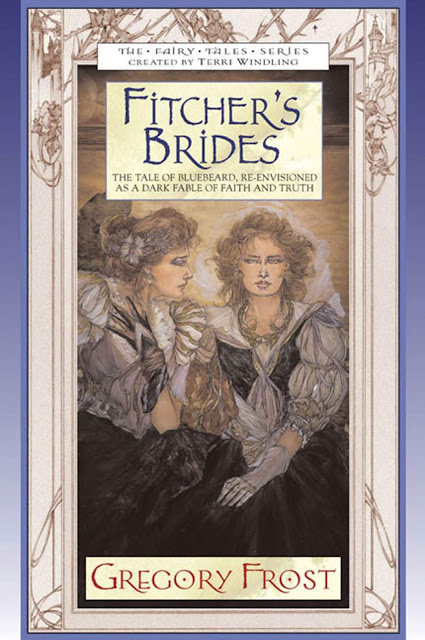
"Fitcher's Brides" by Gregory Frost (published 2003)

Image
“Then Kate sank back upon her pillows and allowed herself the luxury of terror,” reads the closing sentence of Chapter 29 in Gregory Frost’s “Fitcher’s Brides: The Tale of Bluebeard, Re-Envisioned As A Dark Fable of Faith and Truth”. Indeed, this is much what reading the book is like: allowing yourself the luxury of terror while witnessing the effects of a twisted, power-obsessed, murderous preacher’s sermon grasping the minds of the spiritually weak community, all the while knowing that innocent women will be tortured under that same preacher’s hands. Why continue reading? Something about the bone-chilling revelation about the dirtier nature of organized religion (its power to repress, to oppress, and to control) urges you to read on, knowing deep down that some of this fiction has truth within it’s pages. Luckily, like Kate at that moment in the story, you are snuggled and safe under the covers of a warm bed. But also like Kate, you are somewhat unsure of what tomorrow might bri...

"Undine" by Friedrich Heinrich Karl de la Motte Fouque (published 1811)

Image
“Undine”, written in German by Friedrich Heinrich Karl de la Motte Fouque in 1811, is considered one of the finest stories from the fairy-tales and folklore canon. Although the author was influenced by previous stories (specifically a French tale as well as the work of a Swiss writer), “Undine” is exceptional because of the language and writing within its pages. George Macdonald, a Scottish author, has famously said: “Were I asked, what is a fairytale? I should reply, Read Undine, that is a fairytale…” The story begins with a complete and concise statement of the overall plot. What would usually be considered a “spoiler” is not so in “Undine”. And rightfully so, because the elements of the characters and setting are described so mysteriously that the story becomes completely engrossing, and the one reading it will forget all about the introduction. The story is rich with subplots as well, and thus brings the reader into many different worlds; a quaint rural cottage, an island gar...

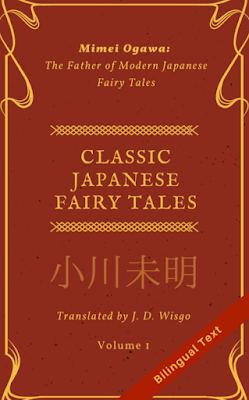
“Classic Japanese Fairy-Tales [Volume 1]: Mimei Ogawa: The Father Of Modern Japanese Fairy-Tales” by Mimei Ogawa, translated by J.D. Wisgo

Image
“Classic Japanese Fairy-Tales [Volume 1]: Mimei Ogawa: The Father Of Modern Japanese Fairy-Tales” is a new collection of Japanese fairy-tales translated into English by J.D. Wisgo (2018). This beautiful collection of six Japanese fairy-tales is precious and unique because it is the first publication of its kind: so widely available (unlike other publications of Ogawa’s) and with refreshed translations of classic tales, many of which are not widely known. Wisgo’s renderings of these stories are brilliant, extremely sensual and vivid, and full of poignant reflection without being overtly literary.  The six tales in this volume include: The Red Candle & The Mermaid, The Clockless Village, The Golden Hoops, Saffron Wine & The Desert Town, The Chocolate Candy Angel, and Many Years Later. To be sure, all of these are indeed fairy-tales (as opposed to fables). The lessons and meanings are subtle and abstract. When towns disappear is it due to bad luck or mermaids? Or, what is ...

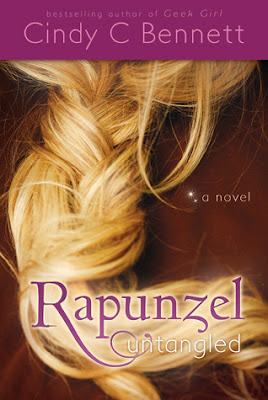
"Rapunzel Untangled" by Cindy C. Bennett (published 2013)

Image
This is the kind of book I wish I had discovered when I was a pre-teen/teen. Although some parts were cheesy and too straight-foward for me (Rapunzel not knowing terms of phrase like "hot" because of how cooped up she is inside her room, or her love interest Fane bringing her an Egg McMuffin present since she's never tried one, or the fact that they've never heard the Rapunzel story despite living in modern times)... not to mention unrealistic... I really did enjoy the story. The character's identities were very intriguing. Rapunzel's first visits to the outside world with Fane, her boyfriend, are very symbolic of what a relationship can do for a person - which is, in this particular story - to make someone feel safe enough to explore the world, no matter how or where. Cindy C. Bennett's contemporary re-telling of the Rapunzel fairy-tale is exciting, full of magic and suspense, and heart-felt. Rapunzel lives way up in the tower of Gothel Mansion, and ...

"The Girl Who Drank The Moon" by Kelly Barnhill (published 2016)

Image
“The Girl Who Drank The Moon” by Kelly Barnhill (2016), winner of the Newbery Medal, is one of the best books I’ve read this year. Although “The Girl Who Drank The Moon” is geared towards kids in about fifth grade, I, at thirty, loved reading this book and was fully engaged with the story, racing towards the end to find out the fate of the characters within the book. Barnhill mixes bits of alchemy, folklore, politics, romance, psychology, adventure, and horror in her fairy-tale, which is all wonderfully expected. But, as New York Times reviewer Diana Wagman has put it, “Many books we read when we’re young want to teach us lessons about life. True, the things we learn in them can stay with us forever. But lessons can be so dull. Luckily, Kelly Barnhill’s wonderful fourth novel, ‘The Girl Who Drank The Moon,’ educates about oppression, blind allegiance and challenging the status quo while immersing the reader in an exhilarating story full of magical creatures and derring-do.” The gir...

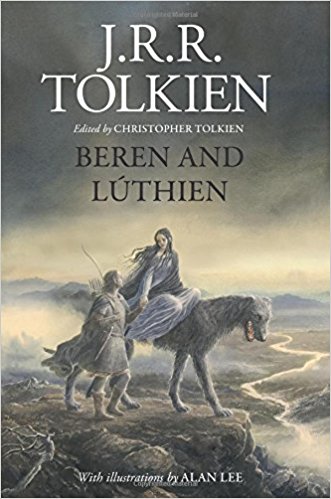
Beren and Luthien by J.R.R. Tolkien

Image
J.R.R. Tolkien’s “Beren and Luthien”, published for the first time as a standalone novel by his son, Christopher Tolkien, last year (2017), is a romantic fairy-tale and fantasy story about the love and journey between a mortal man – Beren - and an Elfin maiden – Luthien. The tale is included in Christopher Tolkien’s edition of his father’s other work, “The Silmarillion”, but is, in this publication, told in full detail, with most of J.R.R. Tolkien’s editions, revisions, embellishments and subtractions included. Reading this publication is like listening to the same piece of music over and over again. Though it is the same song being played, each time it is played the song sounds quite different, with each unique articulation changing the mood, tone, and pace of its story, allowing the listener, or here, the reader, to pay attention to the intricate details, from which an infinite amount of meanings and renderings can be produced. “Beren and Luthien” was notably written a year after...

Tolkien On Fairy-Stories

Image
“Tolkien On Fairy Stories: Expanded Edition, with Commentary and Notes”, edited by Verlyn Flieger and Douglas A. Anderson, is a great reference resource for anyone seriously studying fairy-tales, or for anyone who just enjoys them. Included is an introduction by Flieger, which goes over “On Fairy-Stories”, a lecture which Tolkien presented to an audience at the University of St. Andrew on March 8, 1939 for the Andrew Lang Lecture. Flieger breaks down the essay, addressing each section such as Tolkien’s answer to the question “what is a fairy story” and “what is the origin of the story”. Then, she goes into immediate context, larger context, and publication history. Suffice it to say, there is enough here to even do without reading the actual essay, for the introduction sums it up comprehensively and succinctly. But there’s nothing quite like reading Tolkien’s own writing on the matter of fairy-stories itself. Even without taking studious notes, it is possible to read this essay and...

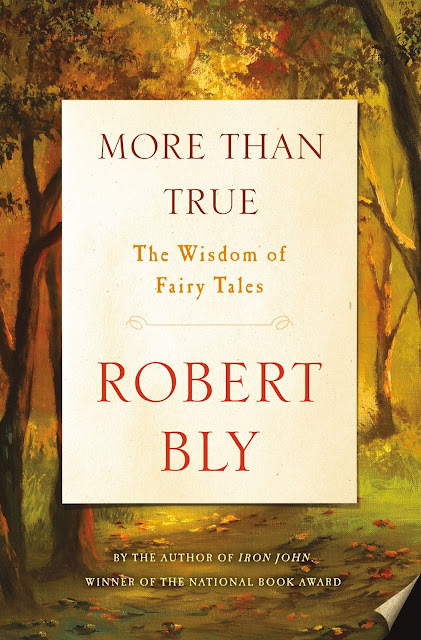
“More Than True: The Wisdom of Fairy Tales” by Robert Bly (published 2018)

Image
At first “More Than True: The Wisdom of Fairy Tales” by Robert Bly (2018) may seem like an over-analysis of children’s stories. Even taken as the psychologically dense stories for adults that they really are, Bly’s writing is a bit jarring at first, to the point of one wondering whether his opinions have come out of unreflective musing, or the thin air, being too far-fetched to be graspable. But rest assured – the man knows damn well that he is right in his thoughts on the power and depth of these tales as pieces of cultural history worth the time of true poetic examination. Readers will pick up on this feeling of righteousness presented within the pages. Slowly, Bly no longer is seen as the crazy professor but instead, a sage of interpretation, believable if only because of an honest to goodness obscurity that finally brings a special common sense grounded in critical thought. Simply, it is hard to detect any of Bly’s ideology at work here – which makes this the perfect book for ...