Posts

Showing posts with the label published 2019

"They Called Us Enemy" by George Takei (published 2019)

Image
George Takei's graphic novel - illustrated by Harmony Becker and co-written with Justin Eisinger and Steven Scott - is an important entry into American history that, for the most part, has not been delved into at depth (and very much should be). Takei's graphic novel, They Called Us Enemy , chronicles his life's memory beginning with a short childhood spent in California and then only a little bit later, the rest of his childhood spent in Japanese Internment Camps set-up by the U.S. government during World War II due to a attack on Pearl Harbor by the Japanese government. Takei's journey is an astounding glimpse into a world fraught with racial politics; the problems with defining people, especially immigrants, by their ethnicity, and the extreme, wieldy, power an unlawful government has to wreak havoc on a person's identity, physical and mental, by means of vocabulary (images of the wartime propaganda are shown), ideological impositions on/of "law" (the j...

"No One Is Too Small To Make A Difference" by Greta Thunberg (2018, 2019)

Image
  A collection of Greta Thunberg's speeches from her travels in 2018 and 2019, No One Is Too Small To Make A Difference is a wrenching written account of her tireless determination to spread solid information - indeed, the Facts - about the global Climate Emergency that is a hallmark moment of the 21st century, not to mention for humanity's epoch in totality. Thunberg introduces herself simply. She just barely mentions her accolades, her academic history, her work history. The most personal she gets is very personal, talking about her fraught fight with her parents to strike for the climate, her younger sister that she worries for, how she misses her dogs, and the collective future of humankind that has found itself hanging in the balance. She leaves the audience with an appropriate onslaught of numbers, percentages, data-driven information regarding how much time (10 - 15 years, if that) we have to turn the Climate Emergency around and what we need to do about it (decidedly...

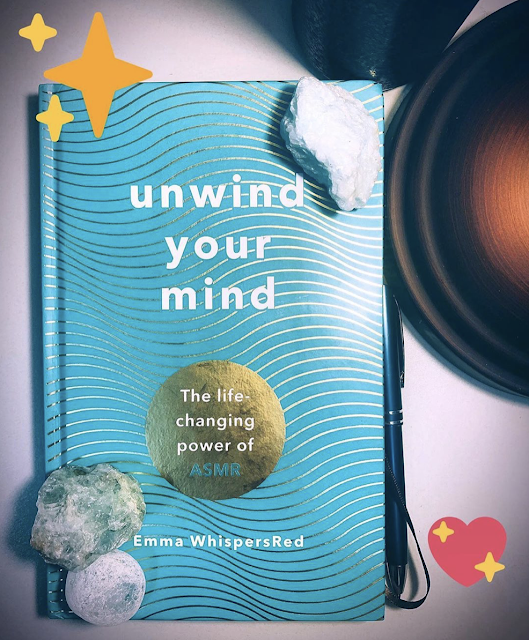
"Unwind Your Mind: The Life-Changing Power of ASMR" by Emma WhispersRed (published 2019)

Image
"I have touched on this already in the book; however, let me say it again: self-development, self-care and kindness is the number one most important job we have throughout our lives. However or whomever you are inside manifests itself in absolutely every aspect of your life, from how you think and how you behave to how you contribute to the world. I have heard it said so many times that living in service to others is the most fulfilling life there is and I wholeheartedly agree with this. But the only way to do that effectively and long term is to first nurture yourself to be the best you can." (p. 147) Emma WhispersRed provides us with an art, or if you prefer, an artistic tool, for self-care and self-help. Autonomous Sensory Meridian Response, now commonly known as ASMR, is a relatively new phenomenon in dominant culture; people who have experienced the ASMR sensation in their childhoods or even before this generation didn't have a name and description for a tingly ...

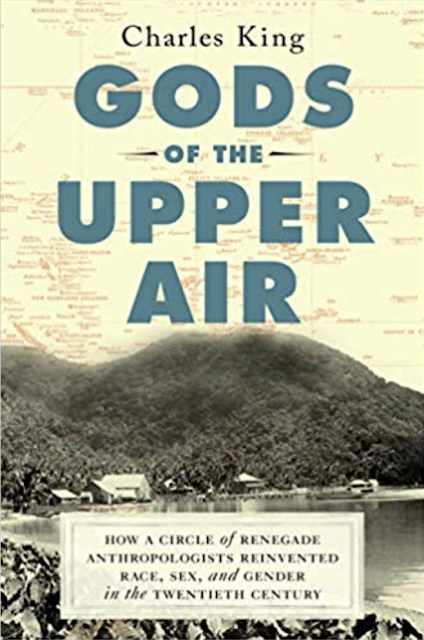
"Gods of the Upper Air: How a Circle of Renegade Anthropologists Reinvented Race, Sex, and Gender in the Twentieth Century" by Charles King (2019)

Image
I've never been fond of the discipline of Anthropology. I understood its merits from a distance, but I couldn't bring myself to try to comprehend how someone - a scientist, no less - could remain morally sound by their objectification of a group of people held steadfastly together by a supposedly empirical view of race, ethnicity, culture, and/or gender. That is precisely the reason why I needed to read this book on the development and evolution of Anthropology in the 20th century. Gods of the Upper Air: How A Circle Of Renegade Anthropologists Reinvented Race, Sex, and Gender in the Twentieth Century (2019) helped me understand that the Anthropological mission, as shaped by Franz Boas, Margaret Mead, Zora Neale Hurston and still others was - and is today because of them - a scientific inquiry aimed to breach ideologies of racism and sexism that led to some of the worst disasters humanity has faced. Author Charles King uses a historical approach in this nonfiction text, sh...

Annotation for "Gods of the Upper Air: How a Circle of Renegade Anthropologists Reinvented Race, Sex, and Gender in the Twentieth Century" by Charles King (2019)

Image
Charles King's  Gods of the Upper Air: How a Circle of Renegade Anthropologists Reinvented Race, Sex, and Gender in the Twentieth Century  acts as a complex case study of the discipline of Anthropology, beginning with Franz Boas - a German man of Jewish descent - who found both success and failure in the United States during the beginning of the 20th century. King's text is fundamental to a critical understanding of how disciplines might be formed and how they change over time.  Gods  digs deep into questions concerning scientific methodology and determinism. Readers will find shocking evidence of how racism has been institutionalized and how scholars, not only Boaz, but also Margaret Mead and Zora Neal Hurston, fought to change the dominant ideologies of a hierarchical concept of race, sex and gender that ruled academia at the beginning of the Industrial Age. Through their application of rigorous empiricism (for example, the study and measurement of skulls) and t...

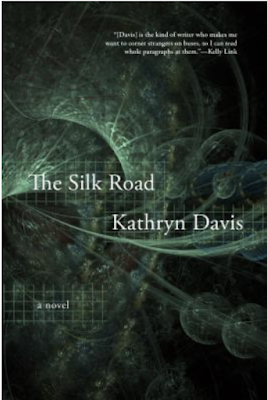
"The Silk Road" by Kathryn Davis (published 2019)

Image
The Silk Road  is set within an interstitial place, somewhere between dream and reality, between the conscious and unconscious, in between anything that allows for something to fit within it. Reading Kathryn Davis' writing in this novel is like falling asleep to music or the sound of conversation; as the mind drifts into deep sleep, the real auditory sounds produce images in the mind - dreams - and the words or music one hears begins to blur within the subconscious of the sleeping mind. As you might be able to guess from what I've written so far, you might be able to tell that the narrative and plot of The Silk Road is not formal, and neither are any other parts of the story, save maybe the characters. "When you arrive at the edge of the world you stop remembering things like how you got there. Your attention keeps pouring over the edge, out and away from the footprints left behind you in the snow, unable to focus on anything except the cove of sparkling light there a...

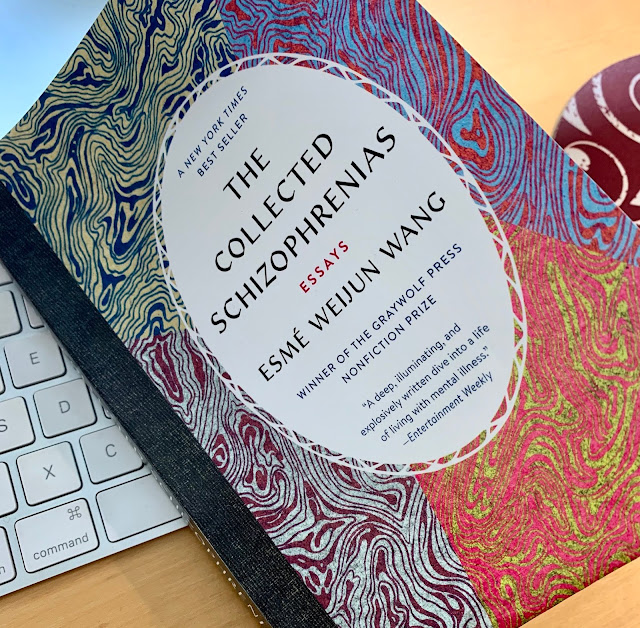
"The Collected Schizophrenias: Essays" by Esmé Weijun Wang (published 2019)

Image
"Though nearly all statements a psychiatric patient can make are not believed, proclamations of insanity are the exception to the rule." To read "The Collected Schizophrenias: Essays" by Esmé Weijun Wang, you must be committed. I say this not to dissuade you, but more to prepare you for the type of book that it is: Wang's writing is decidedly dispassionate and the words less poetic in that flowery way than some may be looking for. However, that is precisely why I loved the book. Moreover, this style (which includes sharp handed, gorgeous prose, I might add) does not take away from the fact that "The Collected Schizophrenias" is for all those deeply committed to raising awareness about mental illness, indeed, mental health, under power structures (such as pharmaceutical industries and hospitals generally) that are imbalanced, difficult to decipher precisely because we all know that the trustworthy and untrustworthy are simultaneously engaged in th...

"Live Oak, with Moss" by Walt Whitman (illustrated by Brian Selznick)

Image
"'Live Oak, with Moss' doesn't *declare* manly love organic, natural, and pure; it takes as a given that it *is*... 'Live Oak, with Moss' is Whitman's first sustained attempt to address the naturalness of love beyond traditional heteronormative boundaries." - from the afterword by Karen Karbiener The naturalness of love in these twelve short poems is in symbiosis with the geography of the natural world as well, making these poems very romantic. But they are enormously sad, save for a few moments, in that this world and his lovers also have the tendency to respond back without passion, as if everything were ambivalent except for the poet himself. There is a yearning here, acknowledging that nothing else matters (not knowledge, nor technology) until love is consummated. Whitman's verses are tender and sweet and painfully echo the drama of a man who cannot reveal his true identity. These poems were hidden by Whitman. However, he wrote instructio...

"Sontag: Her Life and Work" by Benjamin Moser (published 2019)

Image
Who is Susan Sontag? You may have heard her name before. The first time I heard her name was as an undergraduate at Columbia College Chicago while pursuing my Bachelor's Degree in Cultural Studies, probably around 2007. The class was assigned to read Notes on Camp  . I'm not sure I understood then, as I'm not so sure I understand it now, but this is what fascinated me: that an intellectual, an intellectual woman, was writing about culture, specifically commercial  culture in a completely unique way, opening up the realm of criticism to daily observance, witticism, and playful wisdom. At that time, the big buzz around her may have died down, though I doubt it. This was the first time I truly engaged in academia beyond the high school classroom, and the only high school classrooms I cared about were Music, Biology and English. So I had no access to this world up until this point. What I'm getting at: Susan Sontag was never a celebrity to me, I did not have preconceiv...