Posts

Showing posts with the label fantasy

"Daughter from the Dark" by Marina & Sergey Dyachenko (published 2020)

Image
There is a possibility that  Daughter from the Dark  by Marina & Sergey Dyachenko (2020) lost some of its stylistic panach because of its translation into English from Russian. If so, it's a big loss for the novel because its structure is so well conceived as a warpy fairy-tale and contemporary fantasy about a young girl-child from another world and the male stranger who, upon once saving her life, acts  in loco parentis.  The child herself, Alyona, cannot fully explain who she is, where she is from, and why she has no where else to go. Grimalsky, a.k.a. DJ Aspirin, her caretaker (though he treats her with less care than he probably should), teeters between awe, respect, and selfless love on one hand, and on the other, hatred, absolute annoyance, and obligation: not a good sign when the person who is supposed to be your father has no idea how to act except passive-aggressively. This mix of the two brings up a very strange Beauty and the Beast tale, where two...

"Moth and Spark" by Anne Leonard (published 2014)

Image
"A woman in one village had the Sight and predicted doom. There were always such stories somewhere; natural philosophy was still the province of the rich and educated. The poor would have their gods of tree and stream and hollow, their hedgerow cures and charms. But those things were not usually tossed about in tavern gossip. For them to come out now meant fear of something else that was too hard to face. He had seen the hex signs, the wardings, on the farmhouse doors and the roofs of barns. On the sides of the roads were little primitive pyramids of stone for guarding and shrines with offerings of food. People expected evil. It made no sense, not even accounting for the uneasiness the dragons cast... it was the newness of it, he decided, made from raw fear and not unthinking custom." (p. 8, 10) Anne Leonard's Moth and Spark  (2014) tells a saga of old magic's renewal in desperate times of unknowing and obscured discernment within the kingdom of Caithen, a co...

"The Bear and the Nightingale" (Winternight Trilology #1) by Katherine Arden (published 2017)

Image
"He knew what evil lay upon this land. It was in the sun-symbols on the nurse's apron, in that stupid woman's terror, in the fey, feral eyes of Pyotr's elder daughter. The place was infested with demons: the chyerti of the old religion. These foolish, wild people worshipped God by day and the old gods in secret; they tried to walk both paths at once and made themselves base in the sight of the Father. No wonder evil had to come to work its mischief." (p. 113) This passage, found one third a way into Katherine Arden's  The Bear and the Nightingale  (2017), tells of Konstantin, a monk from Moscow, visiting a small village on the outskirts of the kingdom. Konstantin believes he has a mission, a "duty", to save the village people from pagan beliefs and folkloric tradition, but, as the story goes, the collision of God and duty alongside enchantment and magic just make the sum of all parts a more potent whole. Though this story is set in Russia at...

Contemporary Fairy-Tale & Folklore Novels/Novelizations in Adult Literature

Reviews are in the process of being added; book titles are hyperlinked to an outside reviewer or other source and my own reviews are linked as indicated.  The Alehouse at the End of the World by Stevan Allred (2018) All the Birds in the Sky by Charlie Jane Anders (2016) All the Ever Afters: The Untold Story of Cinderella's Stepmother by Danielle Teller (2018) Apothecary Melchoir by Indrek Hargla (2017) The Barefoot Woman by Scholastique Mukasonga (2020) The Bear by Andrew Krivak (2020) The Bear and the Nightingale (Winternight Trilogy #1) by Katherine Arden (2017) | My review:  https://feliciareviewsbooks.blogspot.com/2020/02/the-bear-and-nightingale-winternight.html The Beast's Heart by Leif Shallcross (2019) Beauty is a Wound by Eka Kurniawan (2002) The Bird King: A Novel by G.Willow Wilson (2019) Bird Summons by Leila Aboula (2020) The Blue Fox by Sjon (2003) The Boatman's Daughter by Andy Davidson (2020) Bohemian Gospel (Bohemian Trilogy #...

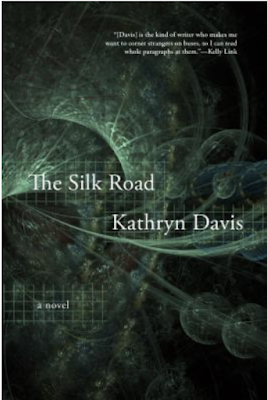
"The Silk Road" by Kathryn Davis (published 2019)

Image
The Silk Road  is set within an interstitial place, somewhere between dream and reality, between the conscious and unconscious, in between anything that allows for something to fit within it. Reading Kathryn Davis' writing in this novel is like falling asleep to music or the sound of conversation; as the mind drifts into deep sleep, the real auditory sounds produce images in the mind - dreams - and the words or music one hears begins to blur within the subconscious of the sleeping mind. As you might be able to guess from what I've written so far, you might be able to tell that the narrative and plot of The Silk Road is not formal, and neither are any other parts of the story, save maybe the characters. "When you arrive at the edge of the world you stop remembering things like how you got there. Your attention keeps pouring over the edge, out and away from the footprints left behind you in the snow, unable to focus on anything except the cove of sparkling light there a...

"Perdido Street Station" by China Mieville (published 2000)

Image
Oh Gods, jabber, Devil's Tail, damn. This book is the best I've read this year. Though -  I'd recommend "Perdido Street Station" to those who are already partial to fantasy, fairy-tales, and science fiction, because the entire novel is heavily steeped in those genre elements and it's an extremely strong brew; a thick and boasty blend, yet a sweet and tart mix of character-driven action, fast-paced at over seven-hundred pages that pulsate with anthropomorphic creatures, evil monsters, a brilliant and non-conforming scientist, beautifully winged-bug maidens, a seedy underworld, a corrupt bureaucracy, sentient A.I. robotrons, pretentious art-world snobs, a hellish brothel of indescribable, sinful creatures and so. much. more.  I'll begin with Isaac, the main character, our passionate scientist unaccepted by his fellows because, well, he's a bit *avant-garde* for his discipline. His thing: Crisis Theory. He's been working on it for some time, but ...

"Neverwhere" by Neil Gaiman (published 2009)

Image
"Neverwhere" is the first book I've read by Neil Gaiman and I thoroughly enjoyed following the main character, Richard Mayhew: a guy down on his luck a billion times over due to his naivety and weirdly optimistic nihilism (perhaps a more sufficient term would be: apathy). Admittedly, Gaiman's style is decidedly not literary (IMHO - at least not here), and I think "Neverwhere" could undoubtedly pass for a teen or YA novel. I couldn't tick off more than one star for that complaint, though. Part of that is because Richard is a genuinely special character. His whole problem within this story - which I found extremely relatable - is that he cannot seem to accept the fact that his old life, his "normal" life, his previous "reality" has been taken from him because of a chance meeting. His choice, to basically help a dying creature on the streets of London (her name is Door, I believe she's an elf), completely changes his entire notio...

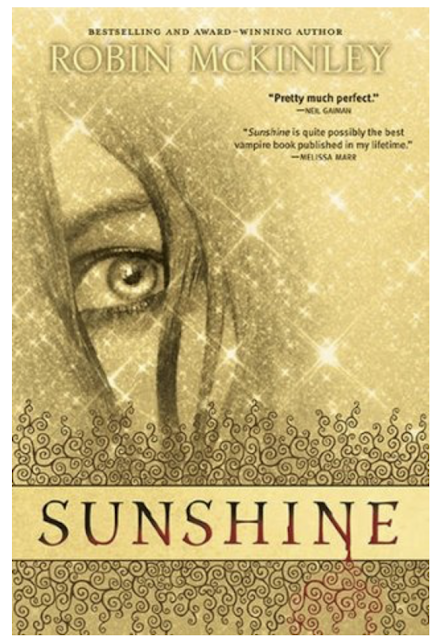
"Sunshine" by Robin McKinley (published 2004)

Image
I might come back to this one: I just couldn't get into the story as much as I would have liked. Something about the very drastic contrast between the arbitrariness of day to day life in the coffee shop, family stuff, and romantic relationships and its stark contrast to the world-history of the Wars between the Others (of various mythological manifestations: i.e. vampires and sorcerers, etc.). Put more simply, there wasn't enough a blurred line right off of the bat between the fantastic and the normal (a blurry-ness which gives that aura of wonder to the fairy-tales I typically read). Also, this narrative reminds me a bit of the television show "True Blood" and I was never a fan of that one either (although my husband is). Lastly, I'm an old soul, admittedly, and McKinley's writing here caters more to young souls (personal opinion); the narrator herself is fairly young (early to mid 20s?) and everything in her world is deemed devoid of mystery on accounts ...

"Black Heart, Ivory Bones" Edited by Ellen Datlow and Terri Windling (published 2000)

Image
In this hilarious, enchanting, and moving collection of twenty fairy-tales, readers will traverse through backwater America, the Italian countryside, the moors of England, and still more places that may - or may not - really exist. Featuring storytellers such as Susanna Clarke, who was still just working on her popular novel Johnathan Strange & Mr. Norrell , well-known fantasy writers such as Neil Gaiman, and unlikely fairy-tale authors such as Joyce Carol Oates, this book will delight all those interested in the less explainable aspects of humanity with a renewed appreciation for contemporary creative writing, particularly in the realm of the supernatural and, strikingly, traditional genre that we have come to name fairy-tales.  While now a more ubiquitous pattern in storytelling, Black Heart, Ivory Bones  gives a sense of freshness to the idea of old and new worlds combined; one running rampant with magic and the historical past, and the other filled with the an...

"A Wrinkle In Time" by Madeleine L'Engle (published 1962)

Image
Newbery Award winning classic children’s story, “A Wrinkle In Time” (1962), by Madeleine L’Engle, is a delightful science fiction and fantasy tale incorporating very real scientific concepts such as a *tesseract* (geometry: the generalization of a cube to four dimensions). To *tesser* means to travel beyond the rules of time and space, which is exactly what Meg, her brother Charles Wallace, her father, a friend named Calvin, and three old women (Mrs. Whatsit, Mrs. Who, and Mrs. Which), do to save one another from being incorporated into a dark planet far from home called Camazotz.  “A Wrinkle In Time” is not quite *hard* sci-fi (concerned by actual scientific accuracy), nor is it necessarily dystopian, although it steers close to both. L’Engle sprinkles a good amount of fantasy elements (such as Charles Wallace’s powers of intelligence and the angelic-like qualities of Mrs. Whatsit, Mrs. Who, and Mrs. Which), offering a brilliant escape from the mundane into a world both fright...

"The Hobbit" by J.R.R. Tolkien

Image
The Hobbit - first of all - is a children's story about journeying. It's tone is playful even throughout the perhaps psychological and physical representations of the trauma of war (this was written between WWI and WWII) . There are huge spiders, evil trolls, and goblin battles, to name a few. These encounters that the hobbit (Bilbo Baggins), the dwarfs and elves have make them a team with the goal to retrieve the treasure that was wrongfully taken away from them (specifically from the dwarf Thorin Oakenshield) by yet another (recurring character in fantasy works) dragon, this one named Smaug. Gandalf the wizard acts as their guardian and teacher, offering kind words, advice, and support, the whole way, that is, the journey from the nice and homely place of Bag End to the dragon's lair at The Lonely Mountain. Bilbo Baggins is a naive jack-of-all-trades, even an odd-ball, and a partaker in pleasurable activities and hobbies, before he is practically pushed out of his co...

"The Girl Who Drank The Moon" by Kelly Barnhill (published 2016)

Image
“The Girl Who Drank The Moon” by Kelly Barnhill (2016), winner of the Newbery Medal, is one of the best books I’ve read this year. Although “The Girl Who Drank The Moon” is geared towards kids in about fifth grade, I, at thirty, loved reading this book and was fully engaged with the story, racing towards the end to find out the fate of the characters within the book. Barnhill mixes bits of alchemy, folklore, politics, romance, psychology, adventure, and horror in her fairy-tale, which is all wonderfully expected. But, as New York Times reviewer Diana Wagman has put it, “Many books we read when we’re young want to teach us lessons about life. True, the things we learn in them can stay with us forever. But lessons can be so dull. Luckily, Kelly Barnhill’s wonderful fourth novel, ‘The Girl Who Drank The Moon,’ educates about oppression, blind allegiance and challenging the status quo while immersing the reader in an exhilarating story full of magical creatures and derring-do.” The gir...

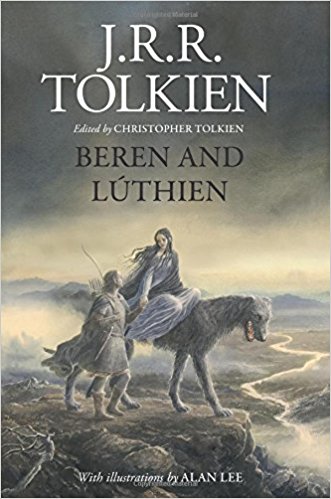
Beren and Luthien by J.R.R. Tolkien

Image
J.R.R. Tolkien’s “Beren and Luthien”, published for the first time as a standalone novel by his son, Christopher Tolkien, last year (2017), is a romantic fairy-tale and fantasy story about the love and journey between a mortal man – Beren - and an Elfin maiden – Luthien. The tale is included in Christopher Tolkien’s edition of his father’s other work, “The Silmarillion”, but is, in this publication, told in full detail, with most of J.R.R. Tolkien’s editions, revisions, embellishments and subtractions included. Reading this publication is like listening to the same piece of music over and over again. Though it is the same song being played, each time it is played the song sounds quite different, with each unique articulation changing the mood, tone, and pace of its story, allowing the listener, or here, the reader, to pay attention to the intricate details, from which an infinite amount of meanings and renderings can be produced. “Beren and Luthien” was notably written a year after...