Posts

Showing posts with the label poetry

"Live Oak, with Moss" by Walt Whitman (illustrated by Brian Selznick)

Image
"'Live Oak, with Moss' doesn't *declare* manly love organic, natural, and pure; it takes as a given that it *is*... 'Live Oak, with Moss' is Whitman's first sustained attempt to address the naturalness of love beyond traditional heteronormative boundaries." - from the afterword by Karen Karbiener The naturalness of love in these twelve short poems is in symbiosis with the geography of the natural world as well, making these poems very romantic. But they are enormously sad, save for a few moments, in that this world and his lovers also have the tendency to respond back without passion, as if everything were ambivalent except for the poet himself. There is a yearning here, acknowledging that nothing else matters (not knowledge, nor technology) until love is consummated. Whitman's verses are tender and sweet and painfully echo the drama of a man who cannot reveal his true identity. These poems were hidden by Whitman. However, he wrote instructio...
"Soft Targets" by Deborah Landau (published 2019)

Image
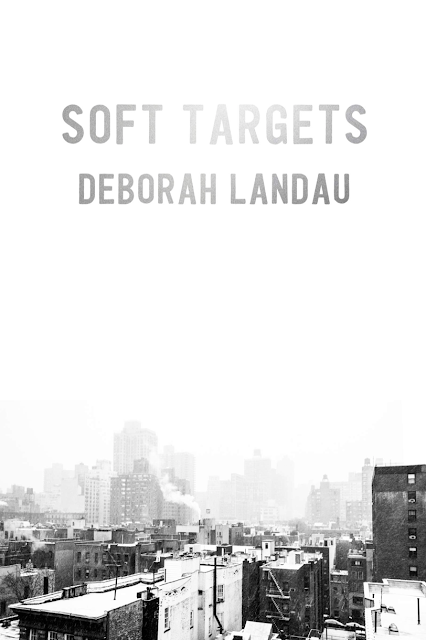
"Soft Targets" is a gorgeous book of poetry that breaks free from over-sentimentality and romanticism. Landau writes about how the body continues to "be", how it continues to "exist" in a world of emotional and physical violence and how this isn't always in sync with the beauty that can be found in smaller, quieter spaces and places. My review will not do justice to Landau's lyricism. I'd say about two hours for a careful read that you won't regret. I love that Landau writes as a mother, a lover, a daughter, a friend, and a citizen of the world. I didn't give it five stars because her poetry seems fragmented, like scenes zipping by in this contemporary life: i.e. it is all too real.

"All the Fierce Tethers" by Lia Purpura (published 2019)

Image
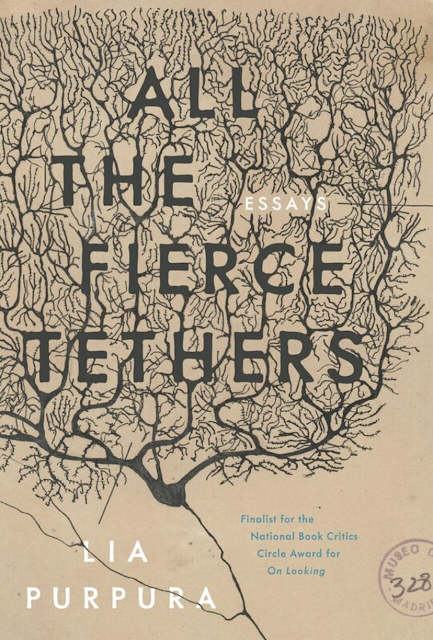
There is an immediate sense of Lia Purpura's poetic intellectualism presented right within the first page of "All the Fierce Tethers". She begins with an analysis of screaming: what it is and what it is not, what it consists of, its meaning or lack of it. Then Purpura goes right into Edvard Munch's "The Scream". There is much more to this first essay, but already within these two topics she uses Deconstruction as a philosophical tool and then begins to present examples of what Walter Benjamin wrote about in his brilliant, seminal essay, "The Work of Art in the Age of Mechanical Reproduction" (i.e. Edvard Munch's "The Scream" reproduced on magnets, on coffee mugs, on blankets. Where does its meaning - as a work of art - go? There is an important *lack* to be understood.) Whether Purpura knew whether or not she was doing what I say she is doing doesn't really matter. It doesn't matter because "All the Fierce Tether...

"Old Possum's Book of Practical Cats" by T.S. Eliot (published 1939)

Image
Reminiscent in style of Ludwig Bemelmans' "Madeline" children's books and an obvious source of inspiration for the Broadway musical "CATS", "Old Possum's Book of Practical Cats" by T.S. Eliot is a complete riot. I don't know how *practical* the cats presented within these humorous poems really are, but most of them are wizened, playful, and shrewd observers of the world. Eliot's cats are mostly street cats, who are somehow both feral and domesticated at once. Their names (Rumpleteaser and Macavity, to name only two) and doings are very funny, and Edward Gorey's drawings of these cats are even funnier: cats mocking what it is to be human - and - fully clothed. Suffice it to say, "Old Possum's Book of Practical Cats" is a pleasure to read and would be really fun to read out loud too, even to children, if you don't mind the mention of alcohol and some scheming escapades of mischievous cats, including theft. More ...

"A Midsummer Night's Dream" by William Shakespeare (published 1600)

Image
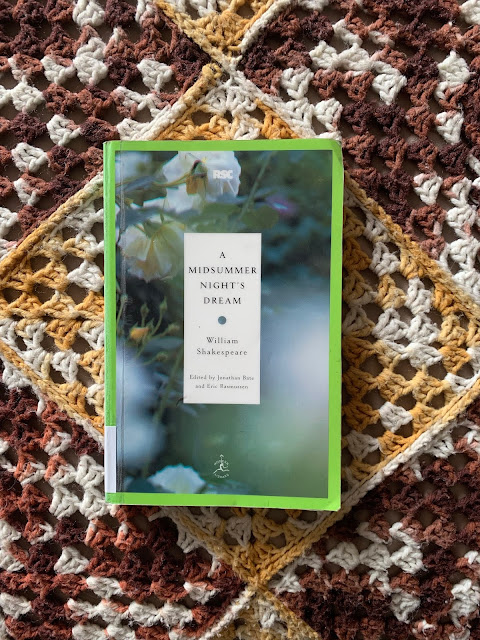
Three different groups are presented in this classic comedic play by William Shakespeare. The mortals - which include Theseus, Hippolyta, Egeus, Lysander, Hermia, Demetrius, and Helena - are wrapped up in their own lives, loves, and relationships with one another. Then there is a second group of mortals, but they are actors in the works of putting on a performance/play. These actors are Peter Quince, Nick Bottom, Francis Flute, Snug, Tom Snout, and Robin Starveling. The third group consists of the playful, mischievous fairies: Titania, Robin, Peaseblossom, Cobweb, Moth, Mustardseed, Philostrate, and Oberon. The whole story takes place in the forest - during midsummer - and includes equal parts sleeping, dreaming, and being awake. While the humans discuss their affairs and troubles, the fairies watch in secret and take notes, and, in their true spirit, decide to do a bit of tinkering with regards to the angel of love, Cupid. When the humans, such as Lysander and Hermia, are asleep ...

"The Last Usable Hour" by Deborah Landau (published 2011)

Image
In a world of scrolling, where I am constantly reading more of the same, unimpressive, kind but not potent, charming but not soulful stuff, stuck amidst the Lang Leavs, Rupi Kaurs, and Nayyirah Waheeds (sorry, not sorry, in my humble opinion only)... Deborah Landau's small book of poetry, "The Last Usable Hour" struck a resonant, harmonious chord with me. There's not too much to *see* in this book. Her poems are textured emotionally and are sparsely descriptive. Sometimes she seems to be talking to herself ("What the hell do you think you're doing?), at just the tip of a certain kind of madness. She remembers little things people say, just a line or two, or how they seemed ("Across the table his mind right there... behind his talking face") she thinks things to herself that conflict with what is actually happening, she's distracted yet not, sometimes stuck in trains of thought, and always drawn in by desire. What is this desire? It's not...

"Transformations" by Anne Sexton (published 1971)

Image
Brilliant, beautiful, sad. With slight sardonic quips and a strong sense for dysfunction, my only complaint is the shrinking of wonder by Sexton’s unveiling of a darker, more painful sense of the martyr’s plight. That may be what Sexton got wrong: that the main character of the fairy-tale is saintly. No, only unknowing, lacking scheme, lacking artifice. Still, the seventeen poems based off of fairy-tales in “Transformations” are brilliant, beautiful, and sad all the same. For all souls who may feel a bit jaded with the world, this one’s for you.

"The Pocket Rumi" by Rumi, edited by Kabir Helminski

Image
Rumi (1207 - 1273), a now much quoted poet, is also an Islamic saint. In The Pocket Rumi , a good amount of his poems and verses are published, and out of these many referenced Christianity: Jesus and even the Virgin Mother. Not in a negative light at all. I do feel it is of importance to note Rumi's Persian and Islamic background. The prophet Muhammad is also mentioned very frequently in his work, which drew me to a closer understanding and appreciation of Islam, without having to open the Koran.  Frankly, it doesn't sit well that a lot of his poetry is not something we might call common humanity or shared human values. Tell me, what historical struggle, what coming together of societal conditions, what political events urges a person such as Rumi towards  love?  Rumi doesn't believe in good and evil, in the moral sense, but he cannot deny his striving towards  goodness . It's in his work, this combining of goodness and love and also, quite differently than t...

"Possession" by A.S. Byatt (published 1990)

Image
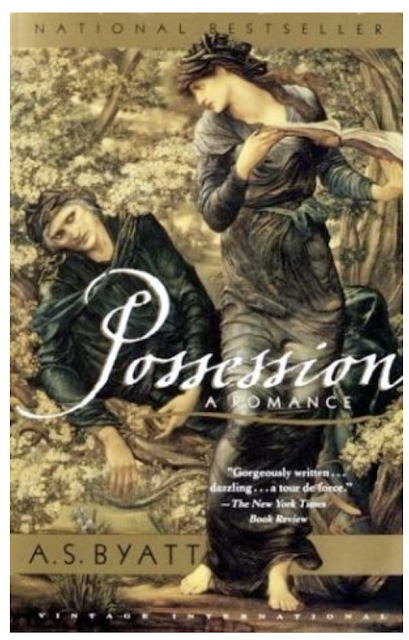
A work of art can be understood as something to one, and something completely different to another. And then, it means something to the author. Sometimes there is a line of clarity, where everyone agrees, and other times the ideas produced by a work are so vastly different that we wonder how to make sense of it at all. We all know and have felt this frenzied state of interpretation. Moreover, we go back to old and new pieces time and time again; a song, a book, a poem, a painting, and as we experience it there is another realization: that time itself has changed the thing, placing it into newer, broader categories of meaning and truth. A.S. Byatt's Possession , winner of the Man Booker Prize in 1990, is a perfect representation of that kaleidoscopic manifestation of art, lived by its creator and then posthumously, and then into academic elucidation. The story, which claims many voices, is mastered by the study of what begins as a singular poet: Randolph Henry Ash. The stud...

Ovid's "Metamorphoses"

Image
“My purpose is to tell of bodies which have been transformed into shapes of a different kind... and spin an unbroken thread of verse” – from Ovid's “Metamorphoses” Ovid’s “Metamorphoses”, first published in 8 AD, is sometimes considered an epic, an epic poem, mythology, legend, or even a fairy-tale or a piece of folklore. Most have agreed that this literary work defies genre. “Metamorphoses” encompasses all the literary descriptions listed above, and is essentially a world-building composition that tells over two-hundred and fifty stories of transformation – transformations of mortals and gods alike – into elements of nature such as plants, animals, and other phenomena. Ovid, born in 43 BC, is an Italian storyteller, and today, it is still a mystery as to why he died in exile from Rome. His “Metamorphoses” contains re-tellings from the Latin and Greek tradition.  For most people who read this text, a lot of names will be familiar, such as the goddess Diana, Hercules, Arachne, K...

"Letters To A Young Poet" by Rainer Maria Rilke (published 1929)

Image
Usually, when someone directly asks me what my favorite book is, I say that I haven’t yet found it, but I love many. This is no longer true. Letters To A Young Poet by Rainer Maria Rilke is now my favorite book, and although I am not an artist, reading it compelled me in such a way that other books have only made me contemplate. Rilke’s Letters To A Young Poet encouraged me to change; my opinions, my fears, and my actions. Rilke asks Kappus, the poet he is writing to, not to neglect his emotions, but to feel them, however wonderful or painful, and to turn “inward” in his search for truth (first letter). Rilke also reminds Kappus, in another letter, that beauty can be found in everything – such as, if one had an unhappy childhood, there are things, perhaps even things special to a certain individual, to be found in memory that, if missed or searched for, will bring peace and humility (sixth letter): “try to be close to Things; they will not abandon you; and the nights are still the...