Posts

Showing posts with the label Victorian Era

"The Time Machine" by H.G. Wells (published 1895)

Image
The first line in the Epilogue of H.G. Wells' The Time Machine (1895) is as follows: "One cannot choose, but wonder." Other than how apt a reflection of the Time Traveller's story as well as the main narrator's and how humble an acceptance, how gracious a plea this is, it is also a main marker of the kind of science fiction I enjoy: whether or not one is presented with proven fact is not the issue. The issue is rather thinking and moreover, wondering what's become and what is to become of the story itself. This particular classic novella of science fiction begins with a request: that the Time Traveller's companions; the Medical Man, the Editor, the Psychologist, the Very Young Man, the Journalist, the Silent Man, and our narrator listen to the Time Traveller's story - with no interruptions - hear him out as if he were a professional storyteller indeed. The Time Traveller cares not whether they believe him but it is clear that he wants to tell it....

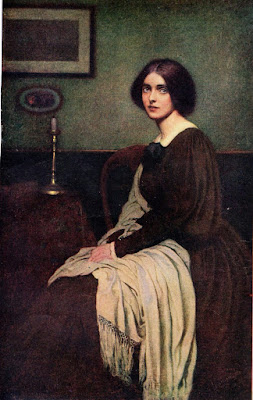
"Victorian Fairy Tales" Edited by Michael Newton (published 2015)

Image
For those true lovers of the literary fairy-tale, this publication, released in 2015 by Oxford University Press (so fairly new for a collection such as this), is a must-read. While we are very familiar with those fairy-tales considered classics, ranging from many countries in Europe, such as Cinderella, The Little Mermaid, and Hansel & Gretel , the collection here is strategic in that all authors included are British, and moreover, these stories emerged during the Victorian Era. This may or may not surprise you, but England is not so famous for their fairy-stories, in so much as those writers like The Brothers Grimm ( Hansel & Gretel)  or Hans Christian Anderson (The Little Mermaid) , Charles Perrault (Cinderella) or Madame D'Aulnoy (Beauty and the Beast) . We don't really remember who exactly wrote The Three Bears , The Selfish Giant, and The Reluctant Dragon (all of which are included here) - and we don't really realize they are fairy-tales from the Victorian...

"Jane Eyre" by Charlotte Bronte (published 1847)

Image
Charlotte Brontë’s well-known novel, Jane Eyre, was published in the year 1847, which is a time that took place during England’s Victorian Era. Brontë’s book is considered by most conventional standards as a work of Gothic Fiction, defined as a mix of fiction and horror, death and romance. Along with elements of the macabre, which make up a part of Gothic literature, there is also Gothic architecture, which defined it also as an aesthetic. Time and place are two very essential parts of understanding literature, and very literally make up the background of a well-written story. The foreground of the story is the characters and their relationships, both to one another and the larger social world they live in. Both background and foreground as presented here will be discussed and will answer two simple questions: 1) Why was Jane Eyre so important when it was published? & 2) Why is Jane Eyre still relevant today? Every era has its societal standards, its status quo. The Victorian E...